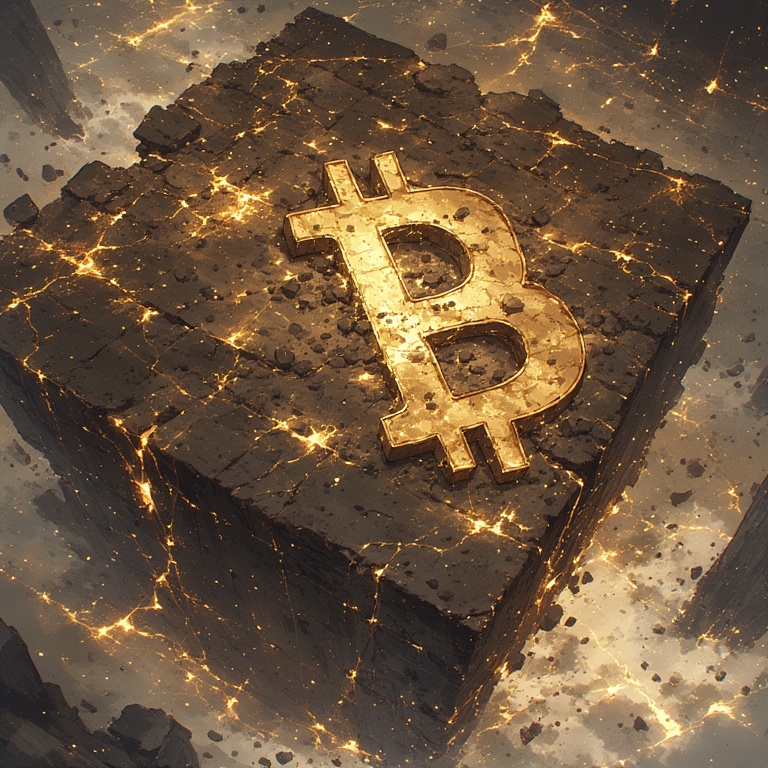
The Block That Started It All
January 3, 2009, 18:15:05 UTC. A block of data appears on a new network. Inside the block's data, encoded in hexadecimal, sits a message: "The Times 03/Jan/2009 Chancellor on brink of second bailout for banks."[1]
A headline from that morning's London Times, embedded permanently in the foundation of a new financial system. Every full node running Bitcoin software validates this block. Every copy of the blockchain carries this message. It will exist as long as Bitcoin exists.
Why that headline? Why that day? To understand, go back four months.
On September 15, 2008, Lehman Brothers filed for bankruptcy with $639 billion in assets and $619 billion in debt, the largest bankruptcy in American history.[2] The Dow dropped 504 points, its worst single-day decline since September 11, 2001.
What followed was a cascade. The next day, the Federal Reserve authorized an $85 billion emergency loan to AIG, taking a 79.9% equity stake.[3] Ten days later, Washington Mutual was seized, the largest bank failure in U.S. history. On October 3, President Bush signed the Emergency Economic Stabilization Act, authorizing $700 billion for the Troubled Asset Relief Program.[4]
When banks gamble and lose, taxpayers cover the losses. When ordinary people lose their homes to the predatory mortgages those same banks sold them, they're on their own. The system that claimed to be self-correcting required the largest government intervention in economic history to avoid total collapse.
October 31, 2008, 14:10 EDT. While governments were still firefighting, a pseudonymous figure named Satoshi Nakamoto posted a nine-page document to a cryptography mailing list. Subject line: "Bitcoin P2P e-cash paper."[5]
The opening:
"I've been working on a new electronic cash system that's fully peer-to-peer, with no trusted third party."
The whitepaper described a system for electronic transactions that doesn't require trust in central authorities. No banks holding your deposits. No Federal Reserve controlling the money supply. No institutions that can be bailed out because they're "too big to fail." The timing matters: six weeks after Lehman, four weeks after TARP, while the crisis was still unfolding.
Two months later, on January 3, 2009, the system went live. Satoshi marked that moment with a headline about bank bailouts.
On February 11, 2009, Satoshi posted an explanation on the P2P Foundation forum:[6]
"The root problem with conventional currency is all the trust that's required to make it work. The central bank must be trusted not to debase the currency, but the history of fiat currencies is full of breaches of that trust. Banks must be trusted to hold our money and transfer it electronically, but they lend it out in waves of credit bubbles with barely a fraction in reserve. We have to trust them with our privacy, trust them not to let identity thieves drain our accounts."
The genesis block headline captured exactly what Bitcoin was designed to resist: a financial system where losses are socialized while profits remain private, where the rules don't apply equally, where taxpayers bail out the institutions that created the crisis in the first place.
That headline serves two purposes. First, it's a timestamp proving the block couldn't have been mined before January 3, 2009, preventing anyone from claiming they pre-mined the network. Second, it's a permanent statement of purpose baked into every node that validates the genesis block.
Nine days later, on January 12, 2009, Satoshi sent 10 BTC to cryptographer Hal Finney.[7] The first person-to-person Bitcoin transaction. The network had its second user. The experiment had begun.
Bitcoin's subsequent history has buried this origin story. The price speculation, the exchange collapses, the regulatory battles, the environmental debates. Most people who buy Bitcoin today have never read the whitepaper, never seen the genesis block message, never encountered Satoshi's explanation of why the system exists.
The genesis block doesn't care about price charts. It carries the same message whether Bitcoin trades at $1 or $100,000.
Thirteen years ago today, someone responded to the largest financial crisis in generations by building an alternative. They embedded their reasoning in code that cannot be edited, deleted, or forgotten. The 50 BTC reward in that first block remains permanently unspendable, frozen in place as a monument to the moment someone decided that money itself needed to be rebuilt.
If you're going to use this technology, build on it, or dismiss it, you should know why it exists.