Armed Minorities Are Harder To Oppress
On the night of January 18, 1958, a South Carolina Klan leader named James "Catfish" Cole set up a public address system in a field outside Maxton, North Carolina, and waited for a crowd. Maxton sits in Robeson County, home to the Lumbee, one of the largest Indian tribes east of the Mississippi.[1] About fifty Klansmen turned out. So did several hundred Lumbee, and they came out of the dark armed.[2]
One of them shot out the single bulb hanging over Cole's sound system. The rest opened fire. Four Klansmen picked up minor wounds, nobody was killed, and Cole was arrested and convicted of trying to start a riot. Klan activity against the Indians of Robeson County stopped.
Disarmament is what makes violence cheap. Before a government or a mob moves against a people, it makes sure those people can't answer back. The work gets done on paper first. Every country keeps guns from certain individuals, and the laws that do it are usually ordinary. A dangerous one describes a kind of person, not an act.
The American South wrote one seven months after the Confederacy surrendered. From Mississippi's Black Code of 1865:
"That no freedman, free negro or mulatto, not in the military service of the United States government, and not licensed so to do by the board of police of his or her county, shall keep or carry fire-arms of any kind, or any ammunition, dirk or bowie knife."[3]
In 1873 a white militia in Colfax, Louisiana killed more than a hundred Black men over a disputed election.[4] Three of the militiamen were convicted under the Enforcement Act, the law Congress wrote to break the Klan. The Supreme Court overturned those convictions in 1876. The right to gather and the right to carry a gun, it ruled, were promises the federal government had made about itself. A state could ignore them. So could the men down the road.[5] Black families in the South had the right on paper and nobody to enforce it, and that lasted eighty years.
In 1921 a white mob moved on the Greenwood district of Tulsa. Police deputized as many as five hundred white men in under thirty minutes. A Justice Department review a century later found the badges went out "with few questions about suitability," and that those same forces spent the night disarming Black residents and confiscating their weapons. One National Guard captain reported that he and his men had "captured, arrested and disarmed a great many" Black men.[6]
In 1938 the Nazi government loosened the gun laws it had inherited, making it easier for German citizens to own firearms.[7] In the month after Kristallnacht it barred Jews from owning a weapon of any kind, alongside the orders that took their shops, their public relief, and their schools.[8]
When the SS arrived to empty the Warsaw ghetto in April 1943, the Jewish Combat Organization had pistols, homemade grenades, and a handful of rifles. The Germans brought two thousand soldiers and police, with artillery and tanks behind them. The fighting lasted twenty-seven days and ended on May 16, when the commander ordered the Great Synagogue demolished.[9]
Almost everyone in that ghetto died. The pistols changed the price of killing them. Two thousand men with armor spent most of a month taking ground from a starving population that was supposed to have nothing to shoot with.
In 1964 Black Louisianans formed the Deacons for Defense and Justice in Jonesboro. They put armed men between the Klan and the civil rights workers organizing in Bogalusa. Those workers came from the Congress of Racial Equality and were committed to nonviolence. CORE's own field staff said the Deacons made their campaign work better.[10]
In California in 1967 the law let anyone carry a loaded gun in public as long as it stayed visible, and that law was what made the Black Panthers' police patrols possible. Don Mulford introduced a bill to repeal it. That May, thirty Panthers walked into the state capitol armed to protest.[11] The bill passed anyway. The National Rifle Association helped write it and backed its passage, and Ronald Reagan signed it.[12] Fred Hampton was killed in his bed two years later, in a raid on an Illinois chapter that ran a free breakfast program and a free clinic.
Every one of these decisions arrived with a respectable reason attached, whether public safety or order or keeping guns away from the wrong people.
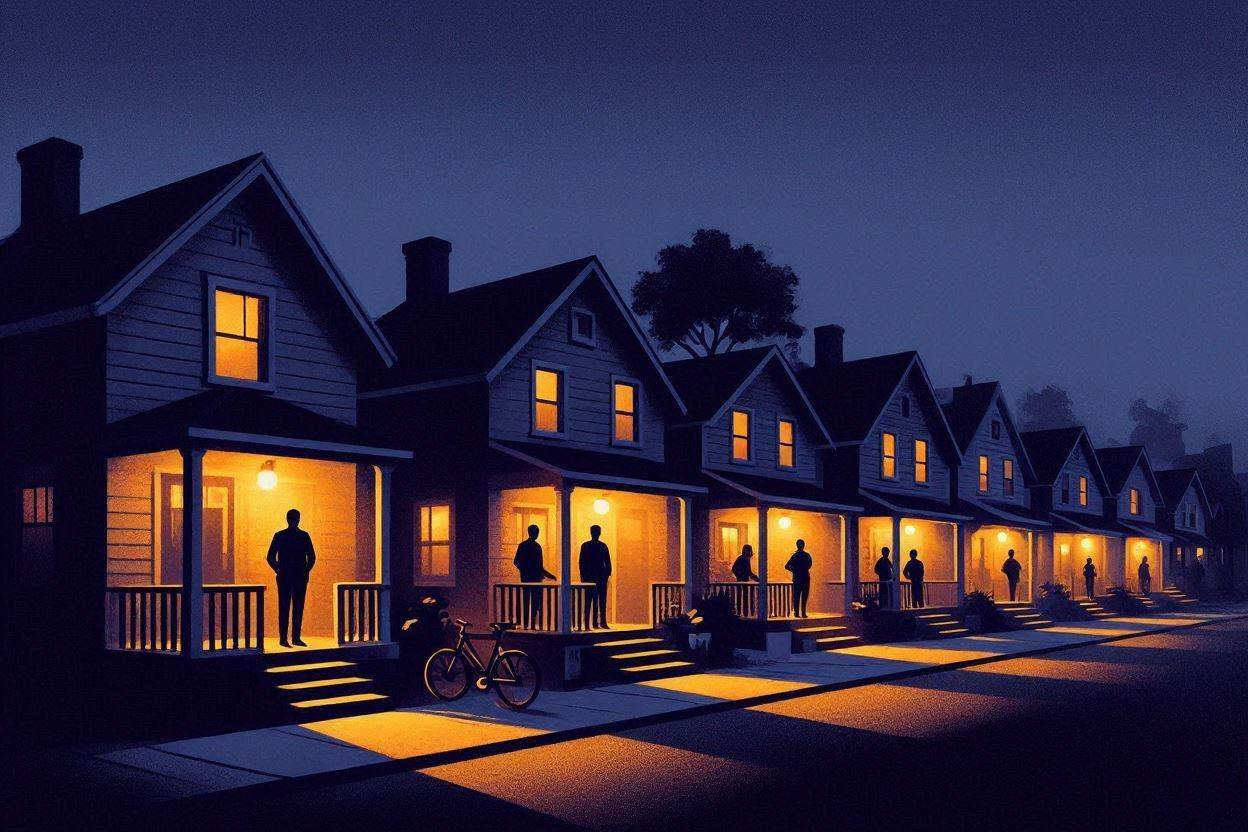
Somewhere tonight, men without badge numbers are taking people out of their homes and into unmarked cars. Some of them don't come back. It happens first to whoever was already on a list.
About a third of American adults own a gun, and 72 percent of owners say protection is a major reason, up from 67 percent in 2017. The people most likely to own one are still white and male. Thirty-eight percent of white adults own a gun against 24 percent of Black adults, and 40 percent of men against 25 percent of women.[13]
Black gun clubs and queer shooting groups run weekend classes now. Learn the law where you live, because it differs from one country and one province to the next and it changes. Get trained before you get equipped, by a club or an instructor who will teach you when not to reach for a weapon as carefully as they teach you how to hold one. Then go meet your neighbors. Find out who answers the phone at two in the morning, who has a spare room, who keeps a first aid kit, who owns a truck.
Cole drove to Maxton with fifty men, a sound system, and one light bulb. He had expected the Lumbee to stay home.