The Right To Be Unknown
In 1890, Louis Brandeis and Samuel Warren published "The Right to Privacy" in the Harvard Law Review.[1] They grounded it in what they called "inviolate personality," the thoughts and emotions a person hasn't chosen to make public. For them, privacy meant controlling how you present yourself to the world. They called it "the right to be let alone" and warned that "instantaneous photographs and newspaper enterprise have invaded the sacred precincts of private and domestic life." Twenty-four years later, Brandeis prescribed the opposite treatment for a different patient:
"Publicity is justly commended as a remedy for social and industrial diseases. Sunlight is said to be the best of disinfectants; electric light the most efficient policeman."[2]
He was writing about the Money Trust, about interlocking bank directorates and concentrated financial power. He'd told his fiancée years earlier that he wanted this work to be "a sort of companion piece" to the privacy article, about "the wickedness of people shielding wrongdoers."[3] Privacy for individuals. Transparency for institutions. Over time, both were inverted.
In 2022, the FTC sued a data broker called Kochava for selling geolocation data collected from more than 61 million mobile devices in a single week.[4] The data tracked visits to reproductive health clinics, domestic violence shelters, and places of worship. Anyone with a credit card could buy it. Two years later, the FTC went after Gravy Analytics and its subsidiary Venntel for what the agency called "surreptitious surveillance," collecting more than 17 billion signals from around a billion mobile devices daily.[5] A Duke University research team bought nearly 50,000 service members' records for twelve cents each, with bulk rates dropping to a penny per record.[6] All it took was a registered domain and a credit card. No background checks on the buyers. No verification of intent.
In 2018, the Supreme Court ruled in Carpenter v. United States that the government needs a warrant to obtain historical cell-site location data from phone carriers.[7] The decision called itself "narrow" and said nothing about data purchased on the open commercial market. The Office of the Director of National Intelligence admitted as much in a 2022 report that took a year of congressional pressure and a FOIA request to pry loose. The intelligence community, by its own account, "does not know how much" commercially available data it collects, what types it holds, or what it does with the data once purchased.[8] ICE, CBP, the FBI, the IRS, and the NSA have all bought location data from commercial brokers, sidestepping the warrant requirement Carpenter was supposed to establish.[9] DHS's own privacy officer ordered a halt in 2019. CBP and ICE kept buying. Senator Wyden warned:
"If the government can buy its way around Fourth Amendment due-process, there will be few meaningful limits on government surveillance."[10]
The Fourth Amendment Is Not For Sale Act passed the House 219 to 199 in April 2024. It died in the Senate without a vote.[11]
Other democracies didn't wait. In 2014, the Court of Justice of the European Union ruled in Google Spain that a Spanish man had the right to have old debt records de-listed from search results, even though the underlying newspaper article remained lawfully published.[12] The court held that information can be true and still say nothing about who someone is today. Four years later, the GDPR codified a right to erasure across the EU, requiring data controllers to delete personal data when the original purpose for collection no longer applies.[13] Brazil's LGPD and Japan's APPI treated data protection the same way, as a general right applied across every industry that handles personal information. The EU Charter of Fundamental Rights gives personal data protection the same status as the right to life and the right to liberty.
The United States still has no general federal data protection law. What it has is a patchwork. One rule for health records, another for children's data, another for financial information. None of them cover the commercial surveillance market that's grown up in the gaps. The country that produced Brandeis is the only major democracy that hasn't written one.
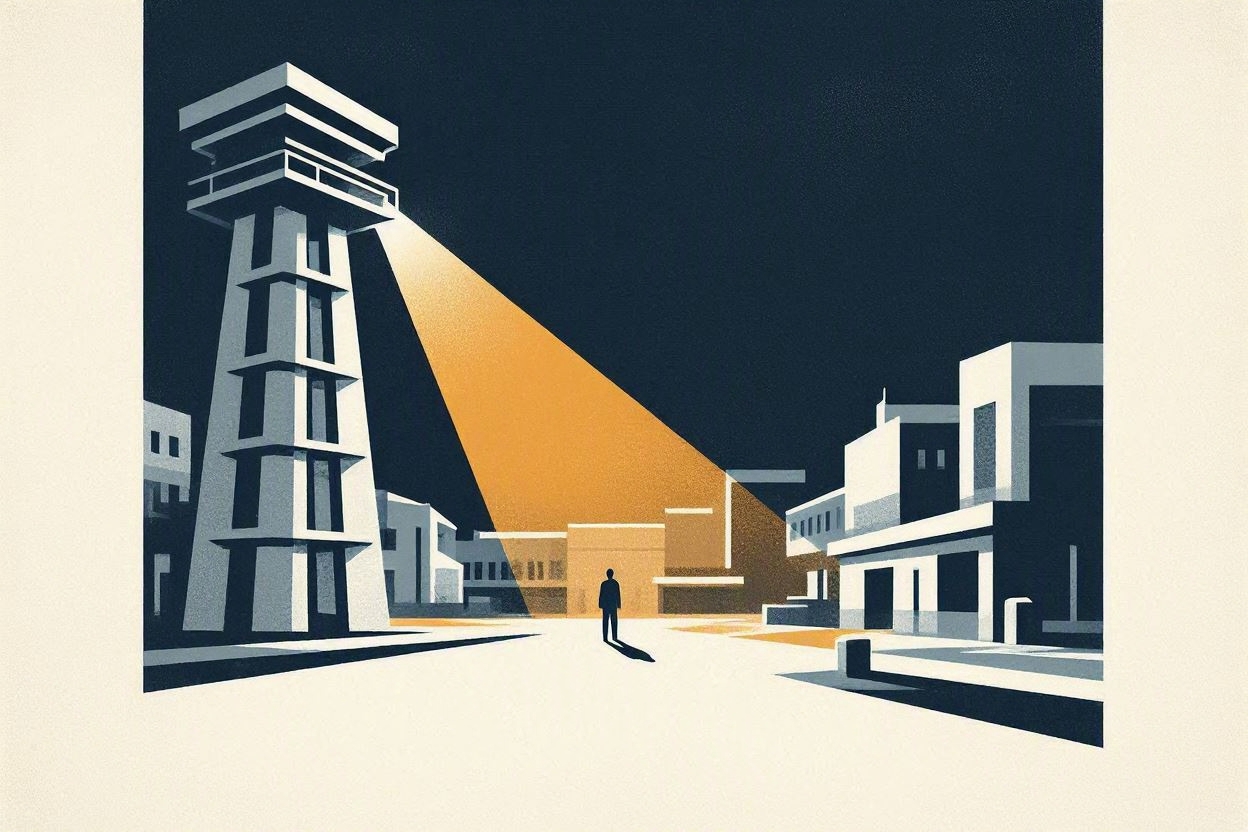
Brandeis wrote "the right to be let alone" when the threat was a portable camera and a gossip column. The phrase was enough for that. It isn't enough for an infrastructure that prices one person's data at fractions of a cent and sells it to anyone with a purchase order, government agencies included. Being "let alone" assumes an intruder you can identify and a door you can close. The collection infrastructure has neither. You're already collected, already aggregated, already for sale. What matters now is the right to be unknown.
Verified without being searchable. A person who can prove they're real, old enough, located where they claim to be, without surrendering a permanent record that follows them through every transaction and every database forever. A marketplace that confirms you're old enough to buy something without ever learning your name. Verification when it's needed, privacy as the default. Identifiable only when you choose to be or when a court compels it. The technology exists. The precedents exist, scattered across a dozen jurisdictions that decided personal data deserves the same protection as personal space. What's missing is the will to question the assumption that all this exposure was ever necessary.